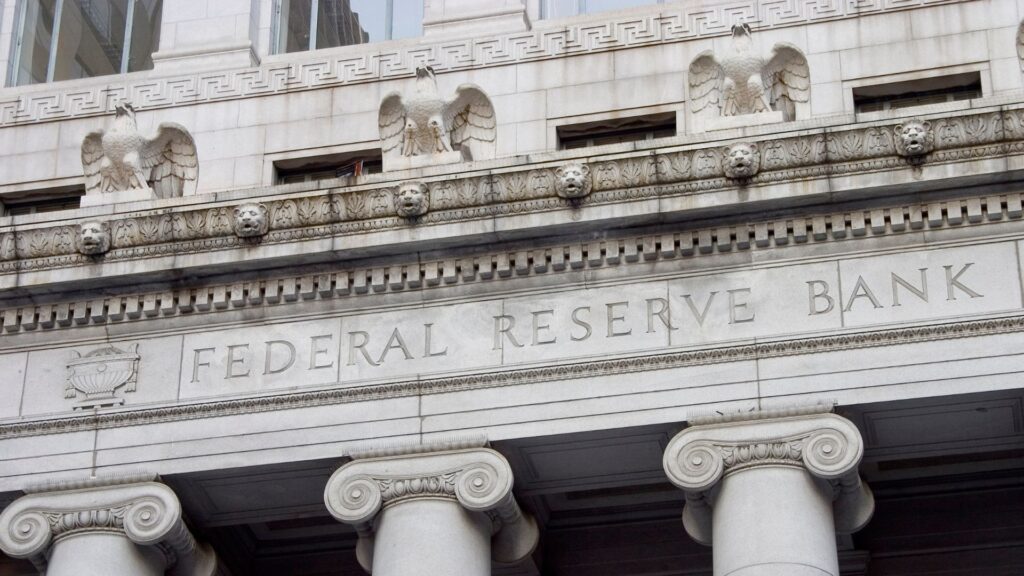
Governments that create their own currency have a unique advantage in the financial system: in theory, they cannot run out of money. This is the gist of Modern Monetary Theory (MMT), a framework that reshapes how we understand government spending and economic management. At its core, MMT argues that countries issuing their own currencies operate under a different financial framework from households or businesses, where money has a limit. Critics however point out the absurdity of it, and dismiss it as a modern fad of increasingly digital economics.
Chartalism
MMT is rooted in chartalism, an economic theory that says money gets its value because the government says so. According to chartalism, money does not get its value from gold or any inherent physical backing. Instead, its value comes from government authority and the fact that people have to use the currency to meet tax obligations.
Chartalist ideas, first shaped by German economist Georg Friedrich Knapp, laid the groundwork for how today’s fiat currencies operate. Knapp’s work directly challenged the old view of “metallism”, which linked monetary value to commodities like gold or silver, showing that money’s value comes from the government. Knapp’s ideas later became a key foundation for MMT, connecting this theory to how sovereign governments manage their currencies and shape economic policies.
Non-Currency-Issuing Governments
Governments that don’t issue their own currency, like Eurozone members or dollarized countries, can only pay for things using money they earn through taxes or money they borrow.
Because of this, they depend heavily on tax revenue to fund their budgets. And when they need extra money, they must borrow it. If investors ever lose confidence in them, borrowing becomes difficult or even impossible. In that sense, their finances resemble a household budget: they can run short on money, rising interest rates can get out of hand, and they can even default if they can’t pay their bills.
Currency-Issuing Governments
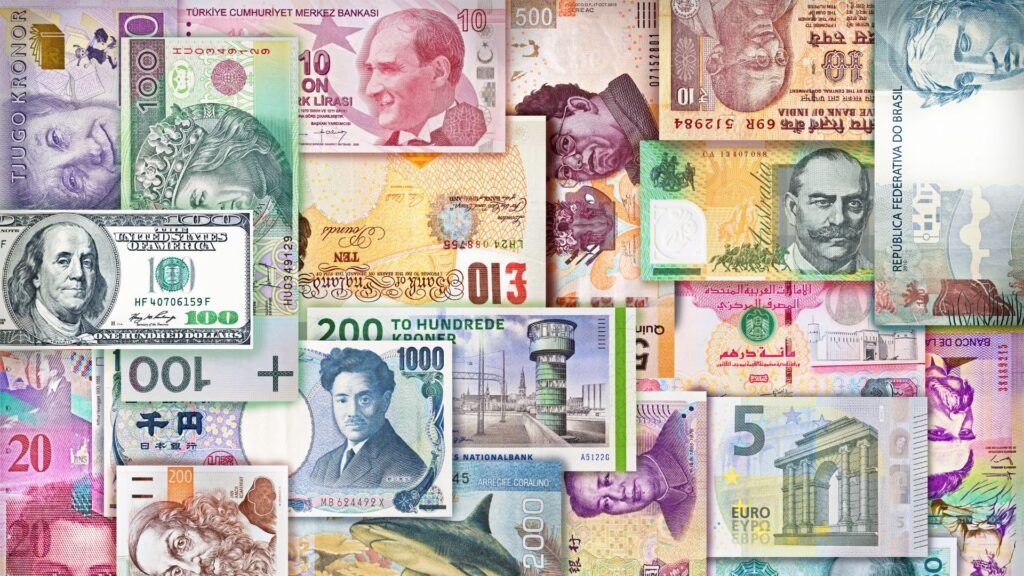
On the other hand, governments that issue their own currency, like the UK, use a completely different system. They pay for things by creating new money every time they spend. They don’t wait to collect taxes; they spend first and tax later. These countries don’t rely on tax revenue for spending, but they use it as a tool to manage inflation and give the money its value.
The Pandemic: A Case Study on Government Spending Power
During Covid, millions of people lost their jobs overnight. Governments had two options: borrow more or create new money to stop the economy from collapsing. Through quick action, countries like the UK managed to stabilise demand and keep the economy from spiralling into a full-blown crisis.
It worked, but it does not grant sovereign governments the freedom to print and spend indefinitely. A government that issues its own currency can’t run out of money, but it can run into inflation. The real concern is limited workers, factories, and resources.
If the government keeps pumping money into an economy that doesn’t have enough productive capacity, everything becomes expensive. In short, these governments have purchasing power, but only to an extent. Spend too little, you get unemployment and economic stagnation; spend too much, you get inflation. MMT is all about aiming for the right balance.
Government Debt
If the government spends more money than it collects in taxes, the leftover money circulating in the economy becomes government debt.
Instead of simply leaving all that extra money floating around, these governments issue bonds, which investors buy with the extra money and earn interest from. Bonds are a way to manage interest rates and offer investors a safe asset to hold on to.
Here’s how it works in practice: When governments issue more bonds, bond prices fall, and interest rates rise. When they issue fewer bonds, bond prices rise, and interest rates fall. Higher interest rates slow down private borrowing and spending, and lower interest rates speed them up. By controlling interest rates, governments basically set the speed of the economy. If people spend too much too quickly, businesses can’t keep up, and prices start rising. If people spend too little, businesses won’t have enough money to stay afloat, and unemployment rises.
This is why central banks constantly adjust interest rates to maintain a stable, steady economy, where:
- Families can plan for the future.
- Businesses can invest.
- Jobs are secure.
- Inflation stays low.
In short, these interconnected strategies show how MMT allows governments to steer the economy. While sovereign currency gives financial freedom, real-world limits like resources, politics, and global markets decide how far that freedom goes.
The MMT Job Guarantee
One of MMT’s most important proposals is the job guarantee. Under this system, the government can theoretically offer a job at a basic wage to anyone who wants one. The idea is simple:
- If the private sector slows down, people will temporarily work under the job guarantee.
- When the private sector grows again, employers hire from this pool.
This program acts like a buffer, stabilising wages, reducing poverty, maintaining skills, and preventing deep recessions. It also anchors inflation by setting a base wage across the economy. MMT supporters argue that unemployment is not natural; it’s just a policy choice.
Sectoral Balances
MMT relies on simple accounting principles:
Government Balance + Private Sector Balance + Foreign Sector Balance = 0
This means:
- If the government runs a deficit, the private sector has more to spend, leading to more jobs.
- If the government spends more, households and businesses hold on to their assets.
This explains why government deficits are not always a bad thing; they often mean higher private-sector wealth. This leads to stronger job creation, higher productivity, and a more resilient economy. In this way, well-managed deficits can support long-term stability and national economic growth.
Common Misconceptions About MMT
Although there is a lot of conviction about MMT, there are some common misconceptions floating around.
1. Governments can print unlimited money
In MMT, governments do not face financial limits, but resource limits. So while sovereign governments can create currency, they can’t create real resources, and that’s what determines spending.
2. Taxes fund government spending
Not for sovereign currencies. Government spending happens first; taxes follow as a tool to manage economic conditions. Taxes give the currency value, shape economic behaviour, and help regulate demand.
3. Government deficits are irresponsible
Deficits are often thought to be inherently dangerous, but MMT reframes them as a mirror image of private-sector savings. If the government spends more than it taxes, the private sector ends up with more income, deposits, and financial assets. This can mean more business activity, higher employment, stronger households, and increased economic stability.
4. Money printing immediately causes inflation
Inflation is not triggered simply because more money exists. What matters is whether the economy can produce enough goods and services to meet demand. If spending grows faster than the supply of labour, energy, or materials, prices rise. Inflation is basically a resource problem, not a money-creation problem.
Drawbacks of MMT
As MMT gained wider attention, it sparked a heated debate among economists and policymakers. Even the mainstream economists, such as former U.S. Treasury Secretary Lawrence Summers and Harvard economist Kenneth Rogoff, have warned about its risks.
Summers calls MMT “a recipe for disaster,” saying it ignores political reality and underestimates the risk of inflation.
Rogoff warns that relying on central bank balance sheets to fund large social programs could destabilise the entire economy.
Here are some of the biggest drawbacks of MMT.
1. Inflation
If governments rely too much on money creation, there’s a real risk they won’t stop in time. They warn that adding more spending in an already busy economy could cause prices to soar, pointing to extreme cases like Zimbabwe and Venezuela.
2. Politics
In theory, MMT proposes raising taxes or reducing spending when inflation rises. But it’s not that simple. Critics argue that no government is brave enough to raise taxes quickly during an inflation spike, especially if it risks votes. So, even if the idea works on paper, it might fail in the real world.
3. An oversimplified model
MMT doesn’t account for how complex global economies really are. Economists believe that MMT underestimates how easily confidence can break in financial systems—how investors can flee, how currencies can weaken, and how inflation can build up quietly before getting out of control.
4. Risk of reckless spending
Economists worry that policymakers will misuse MMT as a free pass for unlimited spending. This could encourage poorly planned programs and undermine trust in the currency and destabilise the financial system.
Despite these concerns, there’s an important takeaway from MMT worth considering: MMT suggests that governments with sovereign currencies have more fiscal room than you think. They can spend big in emergencies and step in when the economy is collapsing.
But critics say that factors such as politics, global markets, investor psychology, and inflation dynamics can complicate the idea.
Is MMT the future or just a fad?
MMT and Chartalism provide a framework for understanding how money functions in the modern world and how sovereign governments manage economic activity.
While the theory offers valuable insights into spending capacity, taxation, and monetary operations, practical constraints define how much freedom governments truly have.
MMT encourages a deeper look at what “affordability” means for a sovereign government and how public spending interacts with real economic resources.
Understanding these principles helps explain why modern fiscal policy works the way it does and how governments navigate stability, growth, and long-term economic challenges.