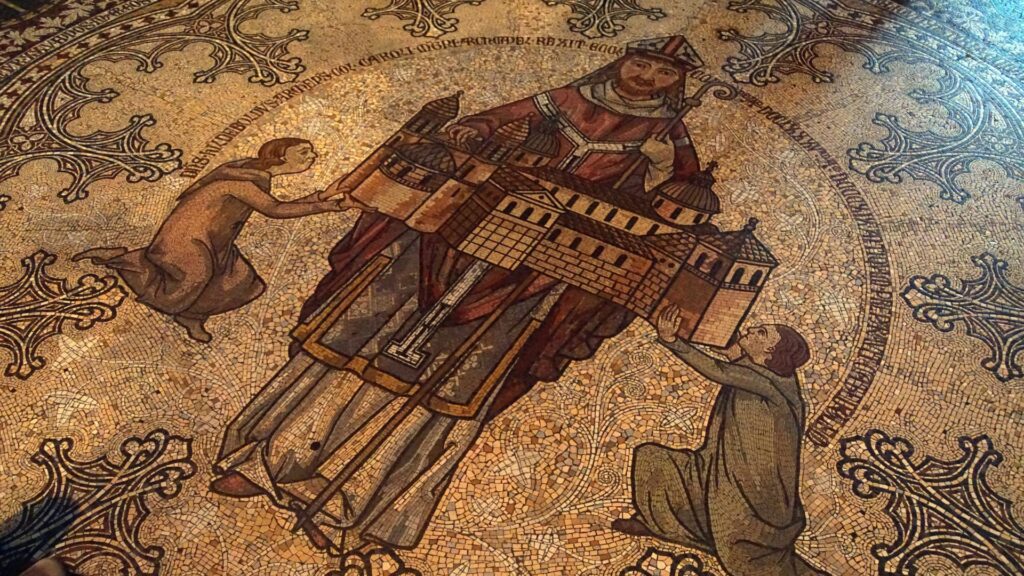
In recent years, a striking metaphor has begun circulating among economists and tech critics: we might be living in technofeudalism rather than capitalism. Picture it as our digital Middle Ages, with Google, Amazon and Meta cast as new-age lords, and the rest of us as their dependents – or “cloud serfs” endlessly posting, scrolling and shopping on their platforms. The idea first entered broad view in writings by Yanis Varoufakis, the ex-Greek finance minister, who argues that something profound has changed: wealth is less about factories and traditional investment, and more about who controls digital “land” – namely data, algorithms and online platforms. Under this lens, the ruling tech giants charge steady rents on everything from our attention to our bank accounts, much as medieval lords charged rent on farmland. Platforms become fiefdoms, and in Varoufakis’s words, the human beings inhabiting them are unwittingly producing value for their digital overlords every time they click or swipe. In this story, capitalism has not so much evolved as mutated into a new regime of rent‑seeking and digital hierarchy.
Medieval feudalism
To see why this feudal analogy has such appeal, it helps to recall how real feudalism worked. In medieval Europe, most people were peasants legally bound to the land, surviving on subsistence while a tiny class of nobles collected rents and wielded coercive power. Serfs had no real wage or market choice; they owed labour, crops or money to the lord of the manor, who protected them with armies and law. By contrast, classic capitalism promises free markets: workers sell their labour for wages, businesses compete for customers, and profits come from producing goods and services, not merely from owning territory. Capitalism transformed feudal estates into factories and markets, helping people leave their hereditary status behind (ideally). Nonetheless, capitalism has long had its own forms of rent, like factory tycoons hoarding patent licenses or monopolies in oil and railways, but scholars argue those were exceptions, not the rule.
The rise of tech firms
Proponents of the technofeudalism thesis say the digital age has upended even those capitalist norms. With the privatisation of the internet and an endless flood of cheap money after the 2008 crisis, a few tech firms amassed unprecedented control over communication, trade and data. In Varoufakis’s striking imagery, imagine stepping into a town where “all the shops… belong to a chap called Jeff,” and an algorithm he controls determines what each person sees on every street. On the surface, it looks like a market, but it isn’t. Jeff doesn’t produce in the traditional sense; he simply charges rent. Whether you’re a small vendor on Amazon’s marketplace or a casual buyer using its site, Bezos’s company takes a cut. People aren’t free to wander to another town of merchants; they’re bound to the system Jeff built. Likewise, on social networks and search engines, your posts and searches generate value for Facebook or Google. Varoufakis calls these firms “cloudalists” who earn not by creating new products but by leasing access to their cloud infrastructure, data and audiences. Every click, like or ride booked through Uber is essentially tribute flowing into their digital coffers.
The comparison to feudal lords is clear. In both systems, a few owners command resources and extract wealth from others who lack real alternatives. Tech platforms impose fees and rules on everyone who depends on them – from app developers forced to pay Apple’s 30% cut, to independent shops paying Google to be seen. In this view, modern serfs might include gig-economy drivers stuck on one dominant app, small businesses trapped in Amazon’s or Alibaba’s ecosystems, and social-media users whose “free” content is commodified.
Even currency feels feudalised: Central bank policies that pumped cheap credit into the economy are seen as subsidies enabling tech millionaires to outbid competitors. Low interest rates helped create a surge of “cloud capital” – billions invested not in factories but in apps, AI and interfaces that corner attention. The result, Varoufakis and others argue, is an economy where supply-and-demand markets give way to monopolistic rentier positions. The rich no longer profit by making things so much as by owning the spaces and data where everyone else “works” online.
Critiques of technofeudalism
But is this truly a return to feudalism, or simply a caricature? Critics of the technofeudalism theory say the differences remain fundamental. Writing for Jacobin, economist Henry Snow cautions that our internet economy may be dystopian, but it’s still capitalism’s familiar tools, just amplified. For one thing, he notes, big tech firms still compete fiercely. Users can (often) switch platforms, and firms like TikTok or Netflix succeed by offering something better or cheaper – exactly as Coca‑Cola competes with Pepsi. Notably, Snow points out that even Varoufakis describes users migrating en masse to TikTok because its algorithm is superior, which looks like plain competition, not feudal migration into a fixed estate. Moreover, companies like Amazon and Google do invest heavily in new products and infrastructure. They pour money into servers, research and development, and yes, even factories. That sounds an awful lot like profit-driven capitalism, not the idle rent-seeking of feudal lords. Silicon Valley titans remain guided by market motives: profits, user numbers, stock prices – variables very much “vulnerable to markets,” as Snow observes, not immune to pricing or quality competition.
Leading tech critics like Evgeny Morozov also argue that talking of digital serfs and techno-lords can be more style than substance. Morozov warns that labelling our era as neo-feudal is a head-turning metaphor, but it risks oversimplifying a complex reality. Yes, wealth concentration and stagnation are worrying, but monopoly and rent are as old as capitalism itself (Lenin called it “monopoly capitalism”). Under capitalism’s evolving logic, corporations have always found new ways to extract surplus – think of how 19th-century trusts or mid-20th-century airlines cornered markets – and each breakthrough technology just adds a new flavour of that game. In his New Left Review essay, Morozov quipped that our fascination with feudal imagery says more about the “wager on shock value” than about structural economics. He points out that if all economic oppression is framed as “feudal,” we lose sight of the ongoing class dynamics of capitalism. After all, Facebook hasn’t revived manorial courts; it simply sells advertising, like any media company (just on a gigantic scale). We are not literally bound to the platforms by force of law, and many digital workers – say the thousands of content creators eking out a living online – are more like independent contractors competing in a harsh market than serfs on a lord’s land.
The real issues of the technofeudalism debate
That said, even critics acknowledge something new is happening. The technofeudalism debate has thrown a spotlight on very real trends: mega‑monopolies, vast financial bloat, and the way our daily life, data and time feed those fortunes. It’s possible both sides are partly right: we could be seeing capitalism in a late, distorted stage that shares some patterns with feudal rent‑taking. For example, the global tech firms resemble gigantic empires, and governments have sometimes acted to prop them up as if they were too big to fail. Economists like Robert Brenner and Dylan Riley have even suggested we might be entering a new regime they call “political capitalism,” where power and profits flow up and backwards, leaving everyone else scrambling. The world of high finance today – with $1 trillion tech valuations and zero‑interest money chasing anything with an “AI” label – can look like a financial bubble bigger than ever. In practice, ordinary people may feel less like free consumers and more like cogs in a machine driven by these platforms. Either way, even those who baulk at the word “feudalism” admit that the old capitalist playbook has changed dramatically in our digital age.
Societal effects
What does all this mean for us, the citizens and small investors? For one thing, the technofeudal framing can serve as a warning. It forces us to question whether concepts like “shareholder value” and open markets still function the way we assume – or whether our wallets and data are funnelled to a few giants by hidden tollbooths. In practical terms, it might underlie why we see blistering debates over antitrust enforcement, data privacy, and the gig economy’s labour laws. If today’s economy really feels rigged, then some argue we need new rules or even new institutions. Varoufakis himself calls for citizens to somehow own the “cloud capital” collectively, a call for digital commons that echoes calls for public banks or platform cooperatives in the tech industry. Others suggest policies familiar from debates on inequality: break up monopolies, tax data flows, raise wages, or expand public alternatives like open-source platforms and community networks.
A mainstream debate
At the very least, technofeudalism has given critics and everyday investors a vivid lens through which to view our high-tech world. It paints a world of algorithmic lords and digital serfs, a provocative narrative that resonates with anyone who’s felt powerless to escape Silicon Valley’s reach. Whether it’s ultimately an exaggeration or a deadly serious diagnosis, it sharpens the argument that we should scrutinise the tech giants’ power, and not assume our old capitalist safety nets will protect us. Seeing Amazon, Google, and Apple as capitalist titans rather than as benevolent lords helps clarify how they really extract value. In the end, the jury is still out on whether capitalism is truly dead or if it has merely donned a new costume. But the fact that the debate has gone mainstream – in finance circles, universities, and even boardrooms – suggests that something big has shifted. Maybe the challenge isn’t to decide what ‘ism’ we’re under, but to ensure that whatever system it is, we have a say in its rules and rewards, and that it serves more than just those that influence it.