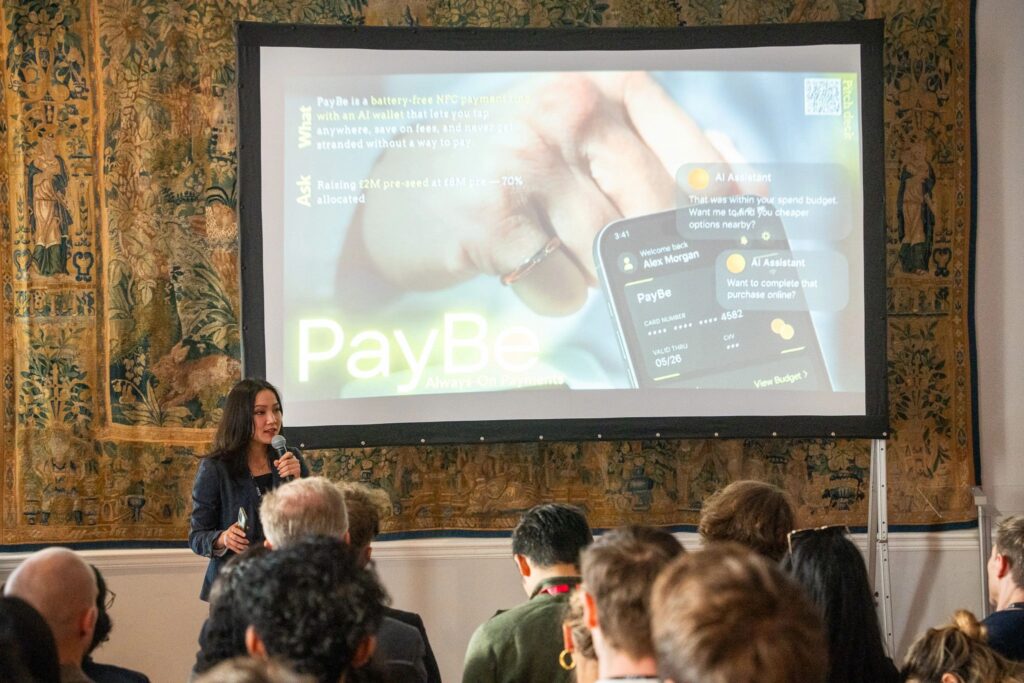
Leaving a meeting at the Bank of England one day, Phoebe had only 10 minutes until her next appointment, which was a leap across London at rush hour. But racing down through Bank Station, she had that heart-stopping moment, realising that her phone was dead.
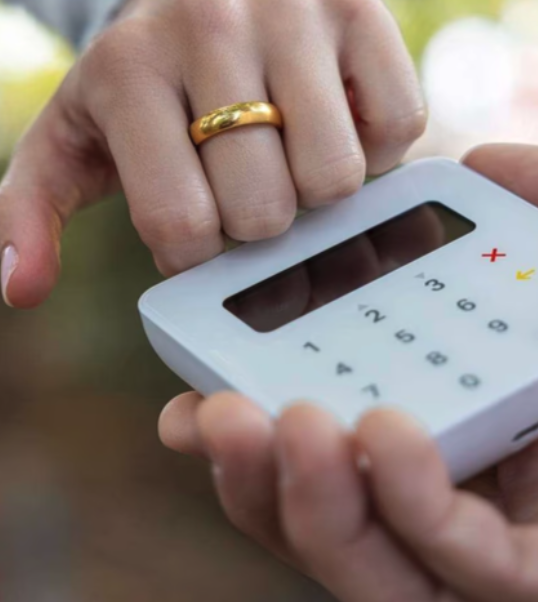
Thankfully, turning the phone on for a split second was enough to trigger the card reader. But sitting on the tube, more by fate than judgment, had Phoebe wondering – is there an overreliance on phones and cards for payments? And could there be a smarter and more efficient way to pay? This idea was the inception of PayBe – a sleek payment ring that lets you buy anything, anywhere, with just a tap of your hand. Most importantly, PayBe rings are battery-free and never run out of charge.
PayBe is now fully operational and is currently raising. It is the only London fintech and AI company in its category at pre-seed.
“Physical cards are lame!” she says, as we sit in The Banker by London Bridge. She knows this area well, having been at Mastercard for three years as a product manager. She paid for the drinks with a PayBe ring, which left the waiter dazed, asking how she had done that and where they could buy one.
PayBe has seemingly hit the ground running.
Born in Malaysia in a small town near Kuala Lumpur, Phoebe comes from a family of entrepreneurial ambitions. With a great-grandfather who ran a mining company, and a mother who ran an IT business, entrepreneurship is in her blood.
“I always felt an urge to go and solve a problem”, she said.
“I had a talent for the arts. But my mum has her IT business, my dad is an electronics engineer in the semiconductor industry, so it was a very physics-heavy household.”
“My parents said, ‘You need to decide what you want to do.’ So I thought, ‘What is the most difficult subject?’ I decided that law was what I would study. It is halfway between arts and science, and case law is about finding logical paths.
“It’s numerical, but artistic.”
After a brief stint as a legal intern, a banking job at Barclays came her way, and she decided to take it, partly for the logic analysis and data, and partly for financial reasons.
“Ruth Bullerwell was my first line manager in payments, and really the true start of my payments career. She took a chance on me when others wouldn’t.”
The next 10 years saw a legendary run of payments progression, as Phoebe went from Barclays to corporate consulting at Worldpay, business analysis at Optal, product management at Mastercard, and then on to American Express, Shieldpay, Zilch and International Airlines Group.
I asked her what fuelled such a flurry of roles in such a short period of time.
“I kept hitting the ceiling, and I couldn’t go any further. I started to ask myself, ‘What am I doing wrong?’ So I switched verticals. Then I would switch verticals again when I had the same problem.”
“Becoming Head of Product was the final goal, but I found that the gap between Senior Product Manager and Head of Product was huge. That is the hardest thing to overcome, especially as a woman.”
“And I had no work-life balance, no routine, and I was travelling a lot, which is hard for you mentally. And even though I was at peak performance, peak earning capacity, I was not happy. I had traded all my freedom for money; I had put on the golden handcuffs.”
“I loved many aspects of these roles. I enjoyed the external side the most. But I wanted to go back to what was my first love, where I got to go and solve a problem.”
In every entrepreneur’s journey, there is often a turning point of this kind.
“In May, I talked to my mum, who is a savvy businesswoman. I asked about starting my own business.”
“She said, ‘Just do it.’”

“I knew it was going to be a payments company,” she said. After a glittering career in payments, it would seem only right.
PayBe, as a name, came with ease. A riff off the name Phoebe, it’s also the style of brands these days: inventing a new word, mirroring the innovation in their space, and conveying the ease of use from how easy it is to say. Think: Monzo, Venmo, Klarna, Revolut.
After leaving her high-flying job, she called her friend in fintech, Sina, and explained what she had just done. He replied with a straightforward answer: “You should talk to my friend Nigel.”
The Nigel he was referring to was Nigel Palmer, an NFC technology consultant with over 10 years of experience helping companies develop NFC products. A pro at this kind of tech.
After one call with Nigel, explaining the problem she wanted to solve, referring to her Bank of England incident, Nigel was interested and swiftly onboarded to the team.
Officially launched in August 2025, PayBe has all the markings of a million-dollar idea. A dedicated founder, a killer idea at the right time in the right landscape, and immediate appeal from anyone seeing it in action.
Plus, the ability of the founder to find the right team and network, seemingly in a very short space of time. Phoebe seems like one of those people who knows everyone.
“I cultivate my network very carefully,” she said. “The trick is to create momentum within your network.”
I asked her what the best thing about being an entrepreneur is. I am always curious about what makes people take those leaps.
“Freedom. My horizons got bigger. It’s the best thing I’ve experienced in a long time. It’s also changed how I see everything.”
“It also changed the way I thought about time. Not just my own time, but other people’s time too. Time is gold dust, and when people are willing to give time, that’s the true currency.”
“Every interaction is an opportunity too. I flipped my attitude from, how much time will this person take, to thinking. What can I offer this person for their time?”
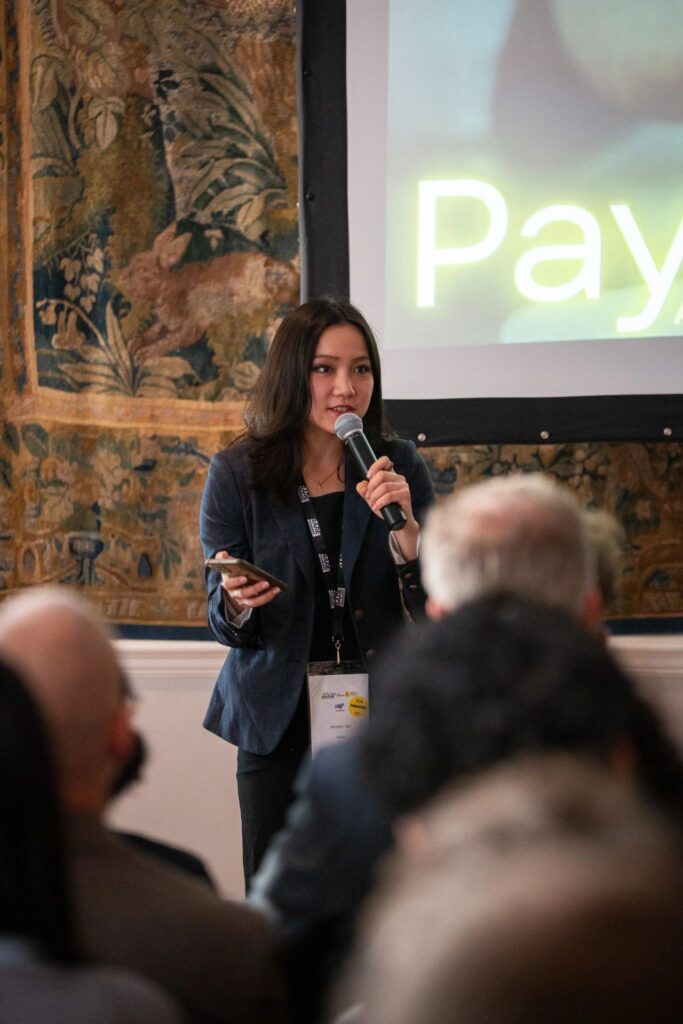
But any entrepreneur knows that true entrepreneurship is no bed of roses. Naturally, I followed up with what the hardest thing about being an entrepreneur is.
“I am a minority in the UK, with no family here. When I moved here, I didn’t know a single person! Everything I did, I did myself.”
“So what got me anywhere is having the courage and humility to ask for help. Even just the humility to say ‘I need help’ can be hard.”
“You lose a bit of yourself. And the hardest thing is that as you grow, you reconcile your new self with your old self. You’re almost constantly in an identity crisis”.
“Suddenly, you’re not the smartest person in the room.”
“Change is the only constant. And the challenges you deal with are always different”
“The mistake I made was dwelling on past wins. And coasting too. Coasting on what is not the present. You have to grind and put the hours in. You get what you put in.”
But how does a new entrepreneur get through these personal challenges? For Phoebe, having faith is something that helped her navigate her career journey and recent venture into PayBe.
“You have to keep going, and have faith.”
“I became a lot closer to my church. They became my family here, as my true family is miles away. They chose to help me too.”
Phoebe is talking about St Helen’s in Bishopsgate, an Anglican Church in the heart of London, which is just a short walk from where we are now. This is somewhere she found during her three years at Mastercard.
“My worth is no longer dependent on my job title either. Entrepreneurship has made me find new ways to reinforce my self-worth.”
It seems the sky is the limit for PayBe, as in less than six months, the business has already launched and is well into a pre-seed round. She has also become an entrepreneur-in-residence at Swiipr, an airline disruption payments company, joining as an in-house payments expert, with her experience in both payments and travel.
“I believe in the fintech industry,” she says, after showing me a WhatsApp group chat of fintech founders, deep in fears over UK fintech. Fintechs notoriously burn a lot of money, especially in highly regulated environments, so this faith and momentum from Phoebe in the industry could not come at a better time.
“I believe in excellence and being the best at everything I do.”
PayBe is a payment ring at its core, but it is geared towards far greater ventures.
The goal is to bridge the gap in payments beyond the smartphone. PayBe is deeply invested in discovering the gaps between payments, biometrics and visual identity.
Biometrics is the future that most tech companies are racing towards, and it’s likely to become a significant part of our lives in the next 5-10 years, as payments become detached from our phones.
“Identity in 2025 is about connecting your digital self with your physical self,” she said.
“It’s about merchants and their systems, and starting with a hardware solution.”
I thought back to the waiter who had just seen the PayBe ring in action when we had first sat down. You could practically hear the cogs turning in his head about how different payments could look.
AI is another topic on everyone’s minds. I asked about how PayBe is approaching AI.
“Agentic AI is so good now that fraud concerns are high. PayBe will ensure that people are real.”
“Everything is converging. PayBe will be an AI friend that learns behaviours and habits, learns where you buy, what you buy, and what you eat. PayBe will be able to use that to make better recommendations. It will embrace the new way of consuming from a Gen Z perspective.”
This is where the raise will take PayBe, launching into authentication, biometrics, and smarter, safer data. It will be the bridge between wearable tech and payments, and define a new future of payments.
PayBe is rooted in Phoebe’s personal plan, one that she calls ‘The Vision’ – a 5 to 10-year roadmap which will take her all the way to the top.

“Nothing can be done half-heartedly,” she said, “and the same principle is true in business.”
I asked more about her philosophy and her networking ability.
“I never push for anything, I just offer a solution,” she said.
“It’s no longer ‘what can I get?’ Instead, it’s “what can I give?”
“And asking the biggest question of all: ‘What is the biggest problem you are trying to solve?’”