At a recent summit of ECOWAS leaders, officials reaffirmed the long-delayed plan for a West African single currency. In June 2021, the bloc’s heads of state approved a roadmap targeting 2027 for launching the “Eco”. This October (2025), ECOWAS Commission President Omar Touray announced a mid‑2027 launch date again. Speaking at the Sahel Governance Forum in Banjul, Touray said the Eco would proceed gradually: “ECOWAS will no longer wait for all countries to meet [the convergence] criteria. The idea is to launch the single currency with those who are ready,” he said. The commitment signals determination, but the Eco has a long history of setbacks. First conceived in 2003, it has been postponed at least four times (2005, 2009, 2015, and 2019). Each target date has slipped, eroding confidence. Now the question looms: after so many false starts, can July 2027 finally stick?
A long-delayed currency
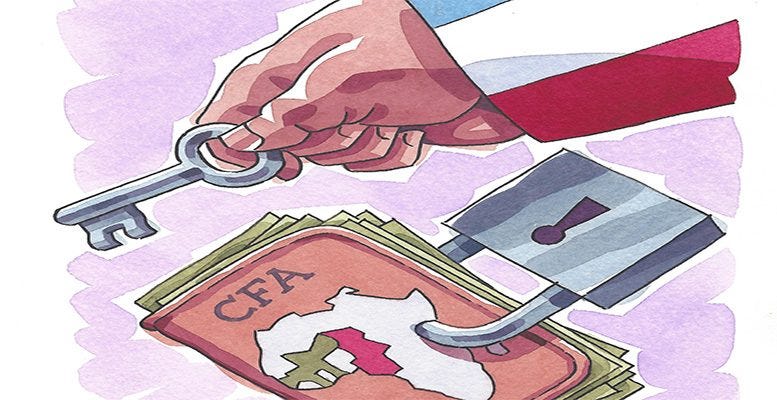
The Eco is intended as a common currency for ECOWAS’s 15 member states, uniting the West African Monetary Zone with the francophone West African Monetary Union. It is part of a broader vision of an African Monetary Union and a central bank. Crucially, the Eco would replace the CFA franc (used by eight ECOWAS countries), breaking its guaranteed peg to the euro. Advocates argue this would restore monetary sovereignty. As one Togolese economist notes, currency is “an identity… like the colour of a country’s flag” – and an independent Africa deserves its own money.
Even the Eco’s push has already loosened neocolonial ties: for example, in 2020, France agreed that former CFA states could hold more of their reserves at home. In principle, a regional currency could foster integration and stability. Kassi Brou, then ECOWAS Commission president, stressed in 2021 that members hoped a single currency “will help to boost trade and economic growth”. In practice, however, progress has stalled repeatedly. Ivory Coast had been slated to pilot the Eco in 2019 but cancelled due to the pandemic, and until recently, no new go‑live date was public.
Divisions & doubts
The road to 2027 is strewn with economic and political obstacles. ECOWAS set strict convergence criteria – single-digit inflation, limited fiscal deficits, strong reserves – that few members currently meet. Ghana is the only country consistently hitting the primary targets; many others struggle with high inflation or debt. Moreover, a deep rift has opened between the CFA franc bloc and the Anglophone bloc. In 2020, the finance ministers of Nigeria, Ghana and four other English-speaking states formally rejected a unilateral CFA‑to‑Eco plan announced by the Francophone UEMOA group. Nigeria, in particular (which accounts for roughly two-thirds of ECOWAS’s GDP), has been wary. It is not under the CFA regime, so it has less incentive to join, and it has demanded its own conditions. As one West Africa analyst bluntly observed, Nigeria “feels [it] has nothing to lose or gain from a common currency”. In other words, Abuja holds the cards. Without full commitment from Nigeria and the other major economies, the currency union’s foundations are shaky. An LSE commentator warns that “without decisive leadership,” especially from Nigeria, “the currency union project will continue to struggle to materialise”.
Adding to the scepticism, Ghana and Nigeria have both launched central-bank digital currencies (e‑cedi and e‑naira) – moves some see as hedging against Eco delays. Mali’s Ahmed Koné points out that if “Nigeria and Ghana are testing CBDCs, it indicates that they are losing faith in the common currency project”. Ghana’s e-cedi and Nigeria’s e-naira pilots coincided suspiciously with Eco postponements. Meanwhile, ECOWAS has been weakened by political turmoil: Burkina Faso, Mali and Niger have all withdrawn from the community after coups in 2023–2024. Analysts note that integration is already limited – intra‑ECOWAS trade is only about 11% of members’ commerce (and African intra-trade roughly 15% overall) – so a single currency is no guaranteed solution.
Still, part of the appeal is political and psychological: breaking the CFA tie is seen as symbolic. As former West African Development Bank manager Clement Gbegnon puts it, a shared currency would be a bold step “to do away with CFA francs, which are considered a colonial relic” and to affirm independence.
Potential benefits
If it can be implemented, the Eco does promise real gains. In practical terms, one currency would eliminate exchange costs and uncertainty in intra-regional trade. ECOWAS leaders have repeatedly said they hope the Eco will stimulate commerce and investment. It would also create a bigger monetary union to counter external shocks: the African Development Bank observes that many West African economies face “externally induced monetary problems that no country alone can resolve”. Politically, the Eco would end the CFA’s implicit French backstop. Today, the CFA franc is still fixed to the euro (at 1 EUR = 655.96 XOF) and effectively guaranteed by France. The Eco is designed to cut that leash. France’s role has already been trimmed to some extent: a 2020 law ended the CFA requirement to deposit half of national reserves at the French Treasury.
In the long run, ECOWAS argues, a single currency would mean a single regional central bank and interest rate, giving the bloc macroeconomic tools it lacks now. In political terms, it could strengthen West Africa’s voice on the global stage. And it could even be a stepping-stone toward broader African monetary integration – another UN-backed goal – if it succeeds.
The road ahead
For now, the new 2027 date must be seen with cautious optimism. Achieving it will require unprecedented discipline across a dozen economies. The current roadmap assumes all participating states will meet the convergence criteria by 2026 – a tall order after years of slippage. The plan’s “gradual” launch idea (Touray’s “ready countries go first”) may ease the task, but it also effectively admits not everyone will be on day one. Even so, observers remain doubtful, as each delay seems to have hardened scepticism.
Others point out that after the pandemic and recent crises, political will is limited and underlying economies need fixing first. ECOWAS has set its sights on July 2027, but history suggests it will not be smooth sailing. The July deadline may come and go; whether it marks a genuine new era or another empty promise depends on whether West Africa can finally unite behind it.