
Imagine a world with no taxes at all. No income tax, no sales tax, no levies on property or profits. It sounds utopian to many and absurd to others. After all, modern states depend on taxes to pave roads, fund schools, pay doctors and soldiers. Benjamin Franklin’s old adage about nothing being certain “except death and taxes” reflects their inescapable nature. Yet throughout history, influential thinkers have pondered whether society could minimise (or even eliminate) taxation. From Enlightenment economists to radical libertarians and crypto-anarchists, the dream of a tax-free society has persisted. Could it ever work in reality? Let’s explore the arguments through the eyes of these thinkers.
Early Visions of “Easy Taxes” & Limited Government
Long before anyone dreamed of Bitcoin or anarcho-capitalism, classical economists were already arguing that low taxes and limited government unleash prosperity. Adam Smith, writing in 18th-century Britain, believed that governments should only perform core functions and keep taxation light. In a famous 1755 lecture, Smith remarked that “little else is requisite to carry a state to the highest degree of opulence … but peace, easy taxes, and a tolerable administration of justice”. In other words, if the state provides basic security, enforces laws fairly, and keeps taxes “easy” (low and simple), then the “natural course of things” – i.e. individuals trading and producing – will generate wealth. Any government that tries to do more (heavy taxes, heavy regulation) risks throttling this natural prosperity. Smith’s minimal-tax ideal was part of his broader belief in laissez-faire economics: let markets and individuals be free, and intervene sparingly.
Smith was not against all taxation; however, outlining principles for fair taxes (proportionality, transparency, etc.) in The Wealth of Nations. But crucially, he favoured taxes that caused minimal distortion to people’s incentives. For example, he preferred taxing luxury consumables over taxing wages or capital. The key was that taxes should neither be excessive nor arbitrary.
Future generations of free-market economists embraced this logic to argue for a small government funded by minimal taxes, claiming that beyond a certain low point, taxes do more harm than good. These classical ideas, that prosperity requires only a night-watchman state (defence, courts, basic infrastructure) funded by light taxation, planted the seed for later thinkers to ask: if lower taxes are better, why not no taxes at all? Is it possible to fund society in voluntary ways entirely?
The Anarcho-Capitalist Case: “Taxation is Theft”
No group has pushed the zero-tax ideal further than the anarcho-capitalists – libertarians so radical they believe the state itself should be abolished in favour of pure private markets. For these thinkers, taxation isn’t just economically inefficient; it’s fundamentally unjust and coercive, a violation of property rights. In the theories of chartalism, tax exists only to uphold the currency itself.
The late economist Murray Rothbard was the chief architect of this philosophy. Rothbard argued that any service the government provides, from police protection to courts and roads, could be better provided by private businesses in a free market. In his view, the state doesn’t have any magic abilities that the private sector lacks; what it does have is the power to force people to pay for its services through taxation, which Rothbard equated to legalised robbery. He famously wrote that the State is “the organisation of robbery systematised and writ large”, and that “taxation is theft” in moral terms. Under a true free market, he envisioned individuals choosing protection agencies, insurance companies, arbitrators, and schools in a competitive marketplace – paying for them voluntarily, just like we buy insurance or internet service today. If you don’t like your police provider, you could cancel your contract and pick another, just as you might switch car insurers. Crucially, no central authority would have a monopoly on force or an automatic claim to anyone’s income.
Rothbard laid out this radical vision in books like For a New Liberty and Power and Market. He acknowledged it sounded extreme, but pointed to the coercive nature of tax-funded governments: if any entity other than the government tried to demand money under threat of force, we’d recognise it as a crime. Why should we accept it from the state? In Rothbard’s ideal society, all associations are voluntary – meaning no taxes at gunpoint, only fees for services you agree to. It’s a society of pure contract.
To critics who say this sounds like Wild West chaos, anarcho-capitalists respond that market forces and private law could civilise society more effectively than states do. They often note that we already see hints of private governance working – for example, eBay and PayPal have their own dispute resolution systems, private neighbourhoods hire security, and arbitration clauses in contracts handle many disputes outside of courts.
Bryan Caplan, a contemporary libertarian economist, argues that “voluntary governance” could replace much of our current state. He imagines businesses owning territory and providing public services much like mini-governments, but based on contract and consent. In Caplan’s words, one could envision “a society where businesses contractually acquire sizable tracts of land, then provide police, courts, and so on as part of a package deal” to residents. The key difference is that, unlike a traditional government, these private providers cannot tax you without your agreement – you opt in by choosing to live under their rules and fees (much as one might move into a private community or subscribe to a service). If you don’t like them, you can exit and choose a different provider.
Caplan acknowledges that getting to that world is tricky. People’s expectations would need to change, but he insists it’s “not crazy, just ahead of its time.” Ultimately, thinkers like Rothbard and Caplan see taxation as an unnecessary evil that society could evolve beyond if we reimagined governance on free-market terms.
Minimal Taxes in Practice: Friedman’s & Others’ Reforms
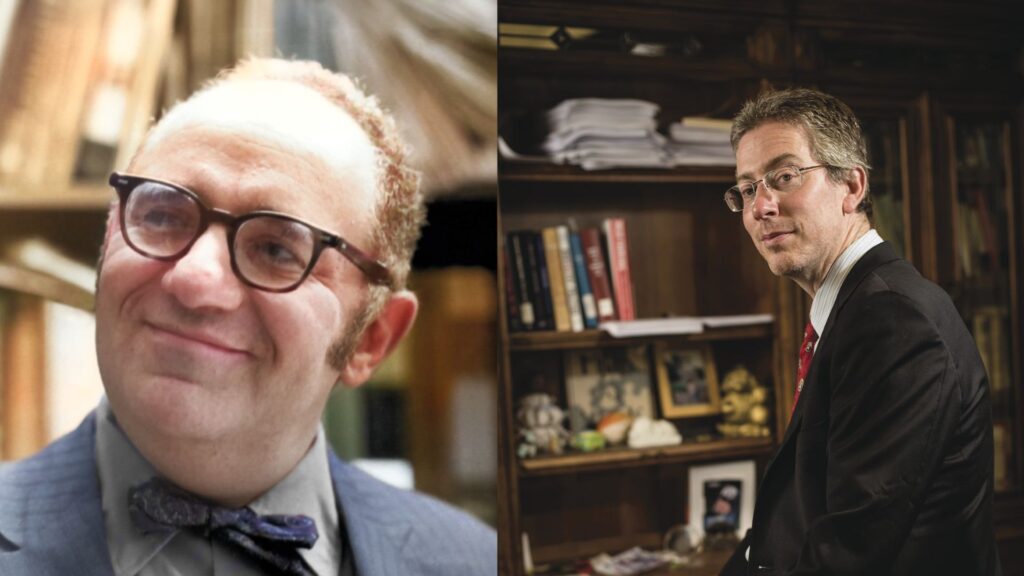
Not all advocates of low-tax societies go so far as to abolish the state completely. More moderate libertarians and economists have proposed systems that retain government but sharply curtail its taxing power. Milton Friedman, for example, was a free-market champion who accepted that some taxation is necessary but sought to minimise its scope and harm. Friedman quipped that the government should be small enough to be financed with a “low single-rate tax” or even through specific user fees (charges for using a service). He popularised the idea of a negative income tax – essentially a simplified welfare system where, instead of many taxes and benefits, people below a certain income receive money from the government, and people above that level pay in. This was intended to replace complex welfare programs and high tax rates that discouraged work.
Friedman argued in Capitalism and Freedom (1962) that a negative income tax would alleviate poverty without expanding a large, invasive bureaucracy. It was a way to ensure a basic income floor for all while still keeping taxes “negative” (payouts) for the poor and moderate for everyone else. In Friedman’s ideal scenario, most public services could be moved toward pay-per-use models or privatised: for example, highway tolls instead of fuel taxes, school vouchers instead of government-run schools, private retirement accounts instead of state pensions. Taxation, in his view, should be as non-coercive as possible – people paying for what they use and direct cash support substituting for paternalistic programs.
The Crypto-Anarchist Twist: Can Technology Make Taxation Obsolete?
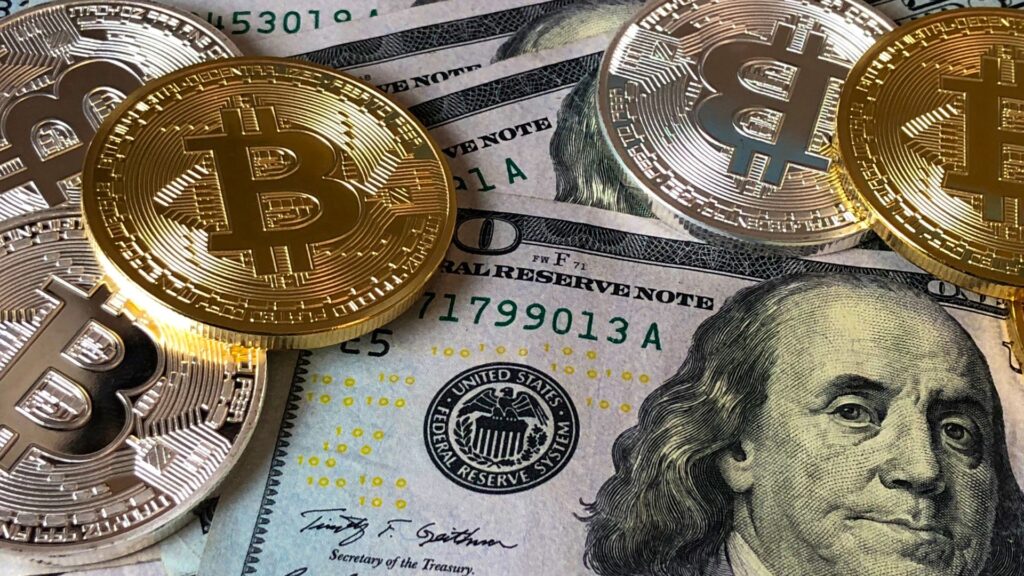
In recent years, the rise of cryptocurrency has added a new dimension to the tax-free society debate. Crypto enthusiasts ask: what if governments simply can’t enforce taxes effectively because money has gone decentralised and private? Saifedean Ammous, author of The Bitcoin Standard, argues that Bitcoin and similar technologies could severely constrain states’ ability to extract wealth. Under a Bitcoin-based economy, transactions can be peer-to-peer and encrypted, and the currency itself is beyond any single government’s control. Ammous notes that governments historically have funded themselves not only by direct taxes but by inflating money – printing currency or manipulating banking to indirectly tax savers (through devaluing money). Bitcoin’s fixed supply and cryptographic network make such inflationary finance impossible. He envisions that if Bitcoin became widespread, governments could no longer stealthily erode your purchasing power or freeze your accounts – they’d actually have to persuade citizens to pay for services. In a striking conjecture, Ammous suggests that as Bitcoin grows, it may “force governments to become more and more a form of voluntary organisation, which can only acquire its ‘taxes’ voluntarily by offering services [people] would be willing to pay for.” In other words, the power imbalance shifts: citizens could opt out of government money, and by doing so, opt out of easy taxation. To fund roads or armies, the state would have to ask nicely, or even run itself like a business funded by voluntary payments or subscriptions.
This crypto-anarchist view essentially hopes that technology will accomplish what libertarian theorists could not: make taxation practically unenforceable, thereby forcing a transition to a quasi-market-based governance. We see early hints of this in the difficulty authorities face in tracking cryptocurrency income and transactions. Even when governments impose regulations, the very design of decentralised currencies makes total control infeasible. Of course, states are responding with new rules (for example, taxing crypto at the conversion points, or banning it outright in some countries). The cat-and-mouse game between regulators and crypto users continues. But crypto proponents believe that in the long run, an economy where wealth can be stored and transferred beyond government reach will either shrink states (because they can’t raise revenue as before) or compel new voluntary social contracts. Ammous and his followers sometimes paint a picture of governments funded by things like donations, lotteries, or club-like memberships in a crypto-dominated future – far-fetched as that may sound.
The Hidden Dangers of Freedom
Philosophically, the allure of a taxless society is maximum freedom for the individual. But some philosophers caution that this can boomerang. Byung-Chul Han, a cultural critic of neoliberalism, argues that when society is framed entirely around individual freedom and responsibility, people often end up exploiting themselves. With no external authority “oppressing” us (no state telling us to pay tax or do XYZ), we paradoxically internalise new pressures – to hustle, to out-compete, to never stop working. Han describes modern individuals as both “the exploiter and the exploited,” trapped in a cycle of self-optimisation.
In his view, what libertarians hail as freedom from state coercion can morph into subtler forms of domination – like financial anxiety, burnout, and social Darwinism. A fully tax-free, ultra-minimal state might amplify the feeling that everyone is on their own. With great freedom comes great uncertainty; not everyone finds that liberating. As Han puts it, “Today a person exploits themselves, believing they are fulfilling themselves. It is the wicked logic of neoliberalism that culminates in the syndrome of the burned-out worker.” His point is that society is more than a collection of individuals – some shared obligations (like paying tax to support others) can foster solidarity and reduce the quiet “self-exploitation” that happens when every person must be their own welfare state, security force, and infrastructure provider.
The Bottom Line with a tax-free society
So, could a society ever be truly tax-free? In theory, yes, if enough people collectively decided to replace taxes with voluntary payments and private contracts. The intellectual blueprints exist, sketched by everyone from Adam Smith (in mild form) to Murray Rothbard (in extreme form). We can imagine small-scale enclaves or digital communities trying to operate on those principles. And technology like cryptocurrency might nudge things in that direction by eroding governments’ easy access to our money.
In practice, however, a completely tax-free society faces steep hurdles. The transition would be tumultuous – dismantling a tax-based state means reinventing how we pay for everything we take for granted (from highways to hospitals to help for the helpless). There would be winners (likely wealthy individuals and corporations freed from tax burdens) and losers (those who depended on public services or redistributive policies). The social contract would have to be rewritten from scratch, and it’s unclear whether most people would sign onto the ultra-libertarian version. Even many who favour “small government” baulk at zero government. Indeed, when push comes to shove, even ardent libertarians often use public roads, call the cops when in danger, and rely on courts to enforce contracts. The apparatus of governance, flawed as it is, does serve a coordinating function that voluntary systems might struggle to replicate fully.
As our societies evolve, however, this wild idea won’t disappear. Each time you hear a heated debate over a tax hike or see a billionaire relocating to a tax haven, you’re touching the edge of the question. Could we do things differently? Could voluntary cooperation really replace compulsory taxation? For now, the consensus is that some taxation is the price we pay for civilisation – but the dream of a truly free (and tax-free) society lives on in the minds of libertarians, futurists, and those who feel taxation is a shackle we might one day escape. Whether that would lead to a new dawn of freedom or a descent into inequality and disorder is the million-dollar (or perhaps zero-dollar) question.